
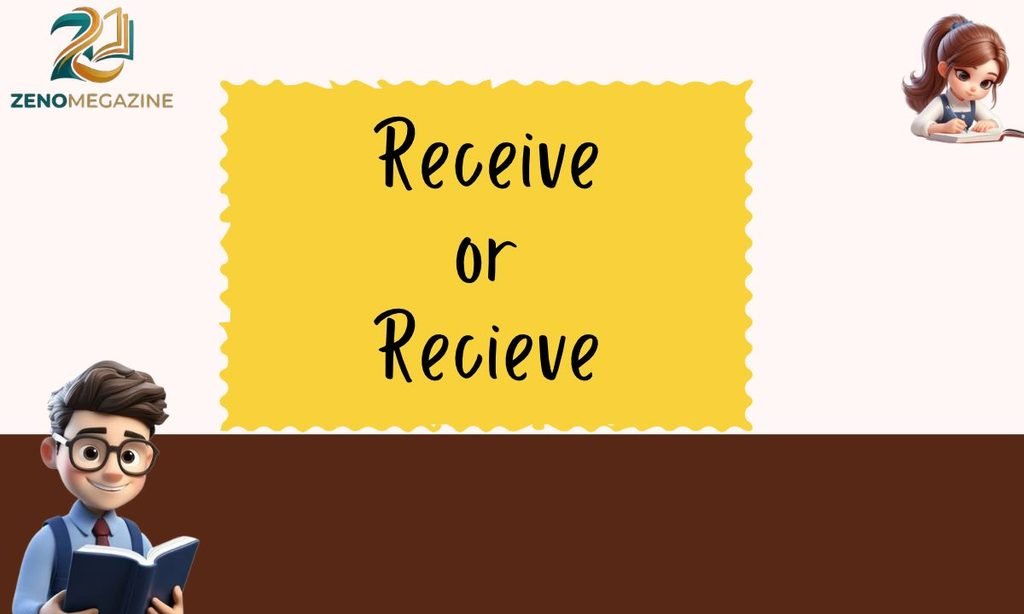

The correct spelling is receive. “Recieve” is a common typo, and it is never correct in English. The “e” comes before the “i” in this word.
Many people mix these up, even native speakers. The two spellings look almost the same, and the word sounds the same either way. This guide shows you the right spelling, why it works, and simple ways to remember it.
Quick Answer:
Receive is correct. Recieve is a misspelling.
Here is the easiest way to remember it: “i before e, except after c.” The letter “c” comes right before the “e” in receive, so the “e” goes first. The same rule gives you received, receiving, and receipt.
Meaning and Definition of Each Word
Only one of these two words is real. Here is how each one works.
1. Receive
Receive is a verb. It means to get, accept, or be given something.
You can receive a thing you can touch, like a package. You can also receive something you can’t touch, like news, advice, or an award.
- I will receive my package tomorrow.
- She received a gift from her friend.
- We receive many emails every day.
2. Recieve
Recieve is not a word. It is a spelling mistake for “receive,” so it has no meaning of its own.
Spell checkers will usually flag it with a red line. Still, it is easy to miss when you type fast.
- ❌ I will recieve my package tomorrow.
- ✅ I will receive my package tomorrow.
Key Differences Between the Words
The main difference is simple: one is correct, and the other is not.
Receive follows the “i before e, except after c” rule. Recieve breaks it. You can use receive in formal writing, such as a work email or a school essay, and in casual writing, such as a text message. You should never use recieve in any kind of writing.
Comparison Table
| Word | Is it correct? | Meaning | Example |
| Receive | Yes | To get or accept something | I will receive the letter today. |
| Recieve | No | Not a real word (a misspelling of “receive”) | ❌ I will recieve the letter today. |
Examples in Sentences
Seeing the word in real sentences helps it stick. Read the correct ones out loud, and notice how natural they look.
Correct Use of Receive
- I receive news alerts on my phone every morning.
- They received a warm welcome at the airport.
- We receive instructions from our manager each week.
- She received a scholarship for her grades.
- Everyone wants to receive credit for their hard work.
Incorrect Use of Recieve
These sentences all contain the same error. Each one should use “receive” or “received.”
- ❌ I will recieve my exam results tomorrow.
- ❌ He recieved a gift from his cousin.
- ❌ Please recieve this small thank-you.
Common Mistakes
The biggest mistake is swapping the “e” and “i” and writing “recieve.” The same slip happens with other forms of the word, like recieved, recieving, and reciept. The correct forms are received, receiving, and receipt.
Another mistake is trusting the rule too much. “I before e, except after c” helps with receive, but it has exceptions. Words like weird, seize, neighbor, and science don’t follow it. When you are unsure, check a dictionary.
Finally, don’t mix up receive with look-alike words. Perceive (to notice or understand) and deceive (to trick) use the same “ceive” ending. They are different words with different meanings, but they follow the same spelling pattern.
- ✅ I will receive your email.
- ❌ I will recieve your email.
- ✅ She received an invitation to the party.
- ❌ She recieved an invitation to the party.
Tips to Remember the Difference
Pick the trick that works best for you.
Use the rule. “I before e, except after c.” Since “c” comes first in receive, the “e” comes before the “i.”
Say it in two parts. Think of “re-ceive.” The “ceive” part always has the “e” before the “i.”
Link it to its family. Receive, deceive, perceive, and conceive all end the same way. If you can spell one, you can spell them all.
Write it a few times. Make three short sentences with “receive” and “received.” A little practice builds a habit.
When to Use Each Word
Use receive any time you mean to get or accept something.
- A physical item: receive a letter, receive a gift.
- A digital item: receive an email, receive a text message.
- A formal event: receive an award, receive feedback.
Don’t use recieve at all. If you see it in your writing, change it to receive.
Grammar Rules Related to Receive
Receive is a regular verb, so its forms are easy to learn.
- Base form: receive
- Third person singular: receives
- Past tense: received
- Present participle: receiving
Here they are in sentences:
- I receive gifts. (present)
- She receives a letter every week. (singular)
- They receive letters daily. (plural)
- I received a letter yesterday. (past)
- I am receiving instructions now. (continuous)
Receive often goes with the word from to show who gave you something. For example: “I received a parcel from my friend.” You can also say you received something with a feeling: “She received the news with joy.”
Synonyms or Related Words
Sometimes a simpler word works better than receive. Here are some options:
- Get
- Accept
- Collect
- Obtain
- Be given
For example, “She received a reward” can become “She got a reward.” Both are correct. “Get” sounds more casual, and “receive” sounds a bit more formal.
Frequently Asked Questions (FAQs)
1. Is it “recieve” or “receive”? It is receive. “Recieve” is a spelling mistake.
2. Why do people write “recieve”? The word sounds the same with either spelling. Many people also forget that “e” comes before “i” after the letter “c.”
3. Can “recieve” ever be correct? No. It is a misspelling in every case.
4. How do I remember how to spell receive? Use the rule “i before e, except after c.” Or break the word into “re-ceive.”
5. What is the past tense of receive? The past tense is received.
6. Can I use “receive” in formal writing? Yes. Receive works well in both formal and casual writing.
Conclusion
The right spelling is receive. “Recieve” is just a common typo. Remember “i before e, except after c,” and double-check tricky words in a dictionary when you are unsure. With a little practice, you will spell receive correctly every time.



Pingback: Chris’s or Chris’ Meaning and Correct Writing Style 2026 - Zenomegazine